

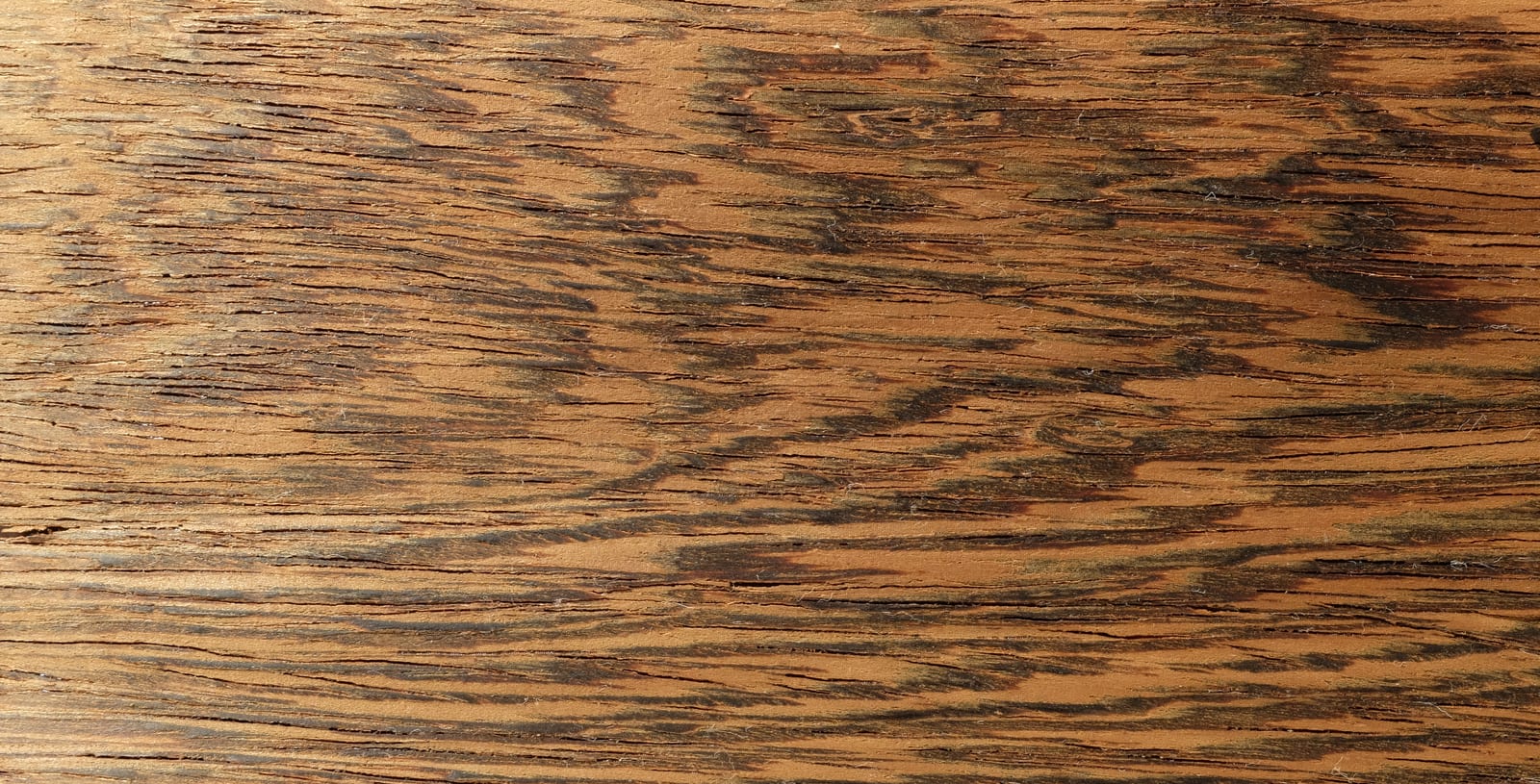
Philipp Zinger, CC BY-SA 4.0, via Wikimedia Commons
Wood Species
Wenge
Millettia laurentii
- Janka hardness
- 1930 lbf
- Specific gravity
- 0.87
- Workability
- Difficult — blunts tools fast, coarse splinters, uneven sanding
Wenge (Millettia laurentii) is a West African hardwood with heartwood so dark — medium brown to nearly black, streaked with darker lines — that it reads as flat-out black from across the shop, which is exactly why it's a favorite for high-contrast furniture and guitar fingerboards.
Working Properties
Wenge doesn't make this easy: it blunts cutting edges fast, sands unevenly thanks to density variation within its own growth rings, and throws off coarse splinters that carry a genuine infection risk if one lodges under your skin. Oil finishes darken it further, though — unusual for a dark wood — continued sun exposure can lighten it back up somewhat.
Safety
Wenge dust is a known sensitizer for some woodworkers — dust collection, a respirator worth considering, and splinters that deserve more respect than you'd normally give them.
Availability
Wenge is listed as Endangered on the IUCN Red List, having lost over half its population across three generations — prices are high and expected to stay that way.
Typical Uses
Fine furniture, cabinetry, flooring, and musical instrument fingerboards.
Images
Raw Wood: gemessertes Furnier; Holzart: WEN, Wenge, Awong, Bokonge, Monkonge — Philipp Zinger, CC BY-SA 4.0, via Wikimedia Commons
Images are sourced from Wikimedia Commons under their original open licenses -- see each image's caption for its specific license and attribution.