

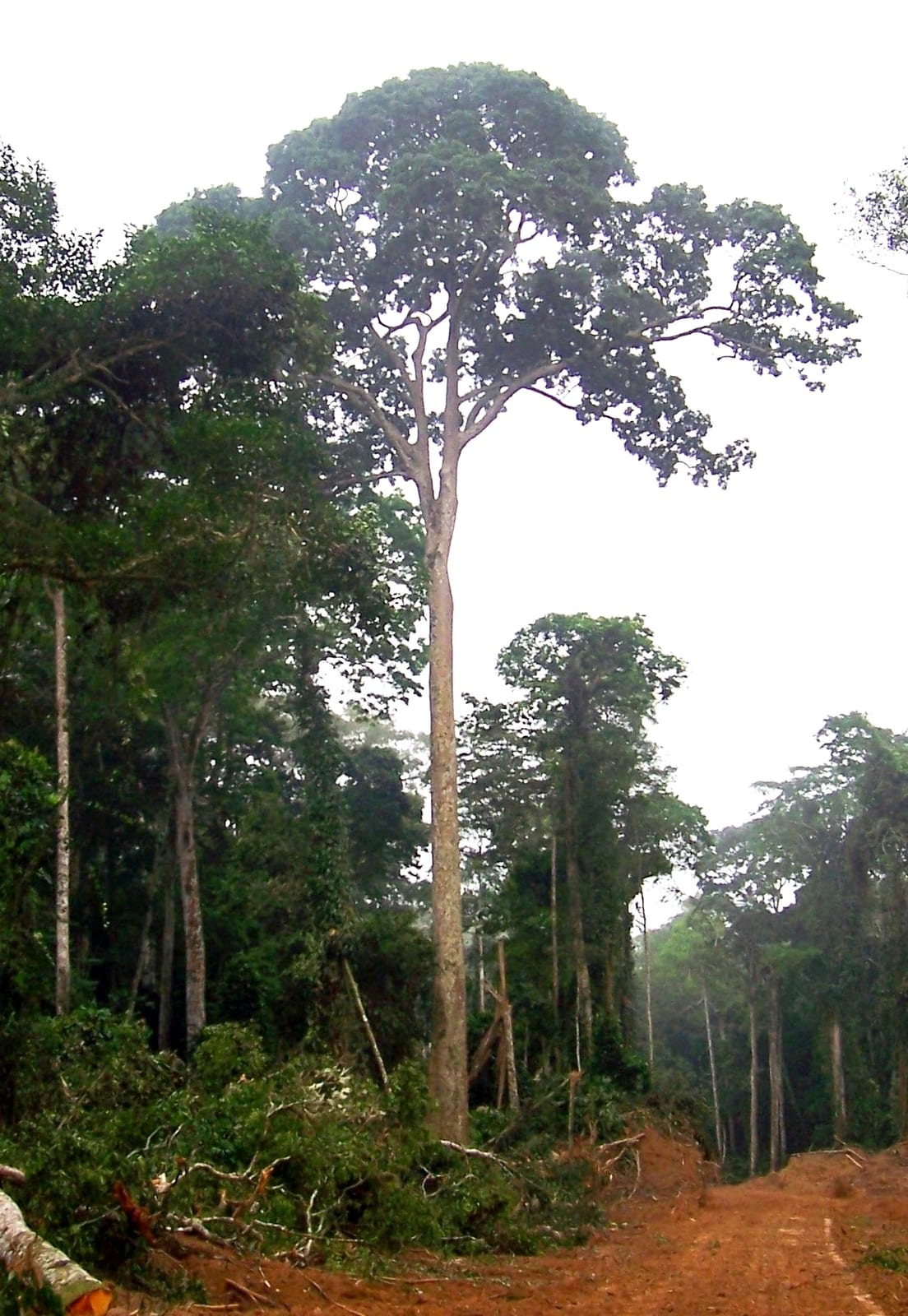
Robert Sharp, Public domain, via Wikimedia Commons
Wood Species
Sapele
Entandrophragma cylindricum
- Janka hardness
- 1360 lbf
- Specific gravity
- 0.62
- Workability
- Moderate — interlocked grain tears out, reacts with iron; turns/glues/finishes well
Sapele (Entandrophragma cylindricum) is a West/Central African hardwood that gets marketed as mahogany constantly, despite sitting in a different genus from both genuine mahogany (Swietenia) and African mahogany (Khaya). Its heartwood runs from golden to dark reddish brown and only gets deeper with age.
Working Properties
Interlocked grain will tear out on you while planing or routing if you get lazy — light passes and sharp tools are the whole trick. Beyond that, sapele turns, glues, and finishes well, reacts with iron (dark staining, so mind your fasteners), and leaves a distinct cedar-like scent hanging in the shop while you machine it. Quartersawn boards frequently show off striking ribbon, pommele, or fiddleback figure.
Typical Uses
Furniture, cabinetry, boatbuilding, flooring, and musical instruments; figured and veneer-grade material commands a significant premium over standard lumber.
Images
Tree: Entandrophragma cylindricum — Sapele Tree. Pokola, Congo-Brazzaville, Republic of the Congo. — Robert Sharp, Public domain, via Wikimedia Commons
Images are sourced from Wikimedia Commons under their original open licenses -- see each image's caption for its specific license and attribution.