

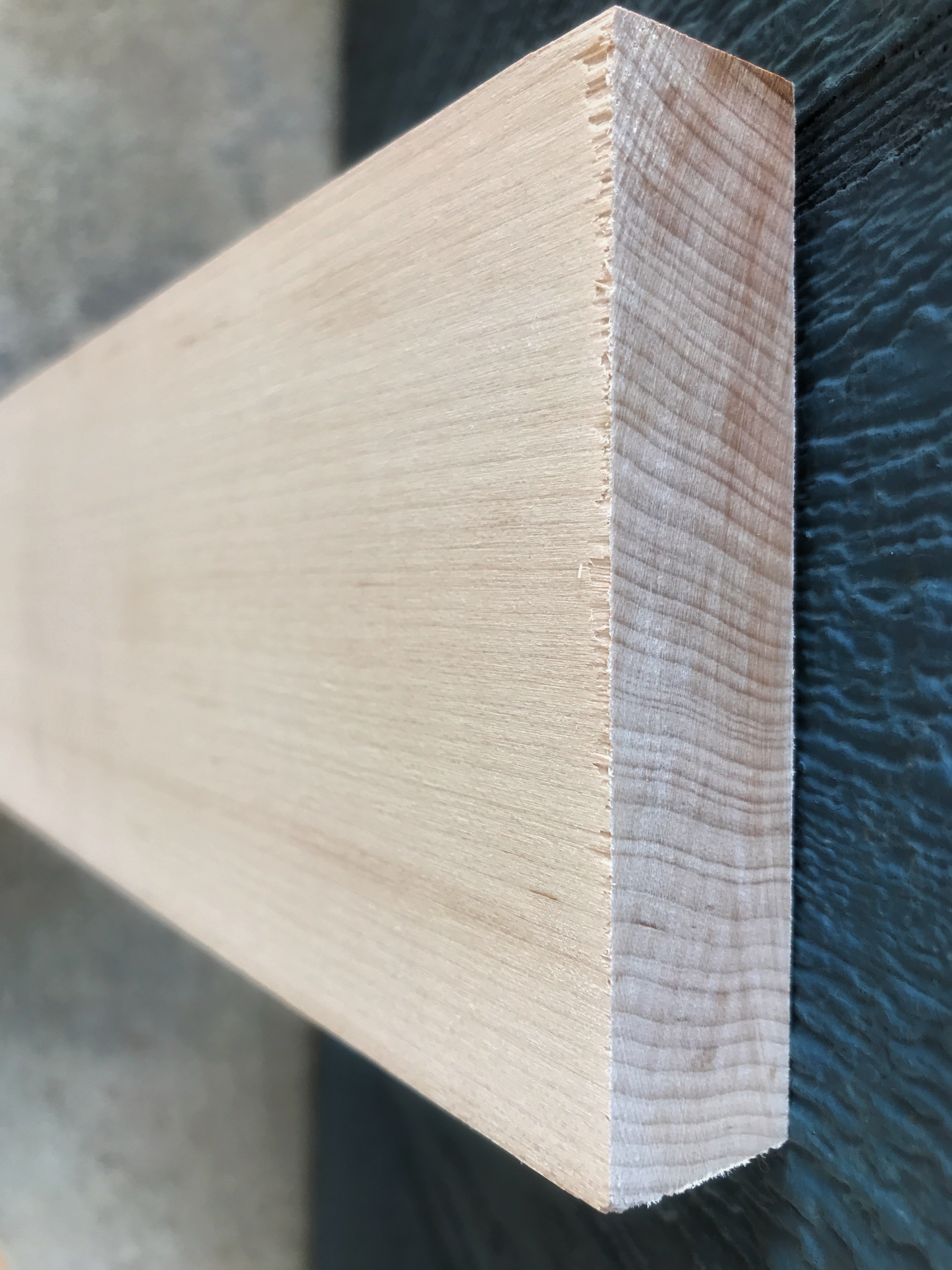
Stephen Ondich, CC BY-SA 3.0, via Wikimedia Commons
Wood Species
Hard Maple
Acer saccharum
- Janka hardness
- 1450 lbf
- Specific gravity
- 0.63
- Workability
- Moderate — hard on tools, can tear out in figured stock
Hard maple, also called sugar maple (Acer saccharum), is about as dense and durable as domestic hardwoods get. Pale, cream-to-light-brown, and tight-grained enough to disappear into the background, it's the wood you reach for when you want durability without the wood arguing for attention.
Working Properties
At a Janka hardness around 1,450 lbf, hard maple is genuinely one of the tougher domestic species you'll put a blade to — noticeably harder than red oak or black walnut. That toughness cuts both ways: it makes for dent-resistant surfaces that shrug off decades of abuse (which is exactly why it ended up under butcher blocks, flooring, and bowling alleys), but it dulls edges faster and punishes a fast feed rate with burning, especially in a router or drill. Figured maple — curly, birdseye, quilted — looks incredible and tears out just as readily; very sharp tools, light cuts, and sometimes swapping the final hand-plane pass for a scraper are the price of that figure.
Movement and Stability
Hard maple doesn't sit still for humidity — tangential shrinkage (green to oven-dry) runs around 9.9%, radial around 4.8%, putting it among the more restless domestic hardwoods on the seasonal-movement scale. Design wide panels with real allowance for that; run your board width and local climate through the Wood Movement Estimator before you commit to a glue-up.
Safety
Hard maple dust is a respiratory irritant like any hardwood dust, and long-term exposure carries the same recognized risks OSHA and NIOSH flag regardless of species. Dust collection and a properly rated respirator, no exceptions.
Typical Uses
Flooring, butcher blocks and cutting boards, cabinetry, and musical instrument necks and bodies — anywhere a hard, durable, light-colored surface earns its keep.
Images
Raw Wood: White Hard Maple lumber with quartersawn grain — Stephen Ondich, CC BY-SA 3.0, via Wikimedia Commons
Images are sourced from Wikimedia Commons under their original open licenses -- see each image's caption for its specific license and attribution.