

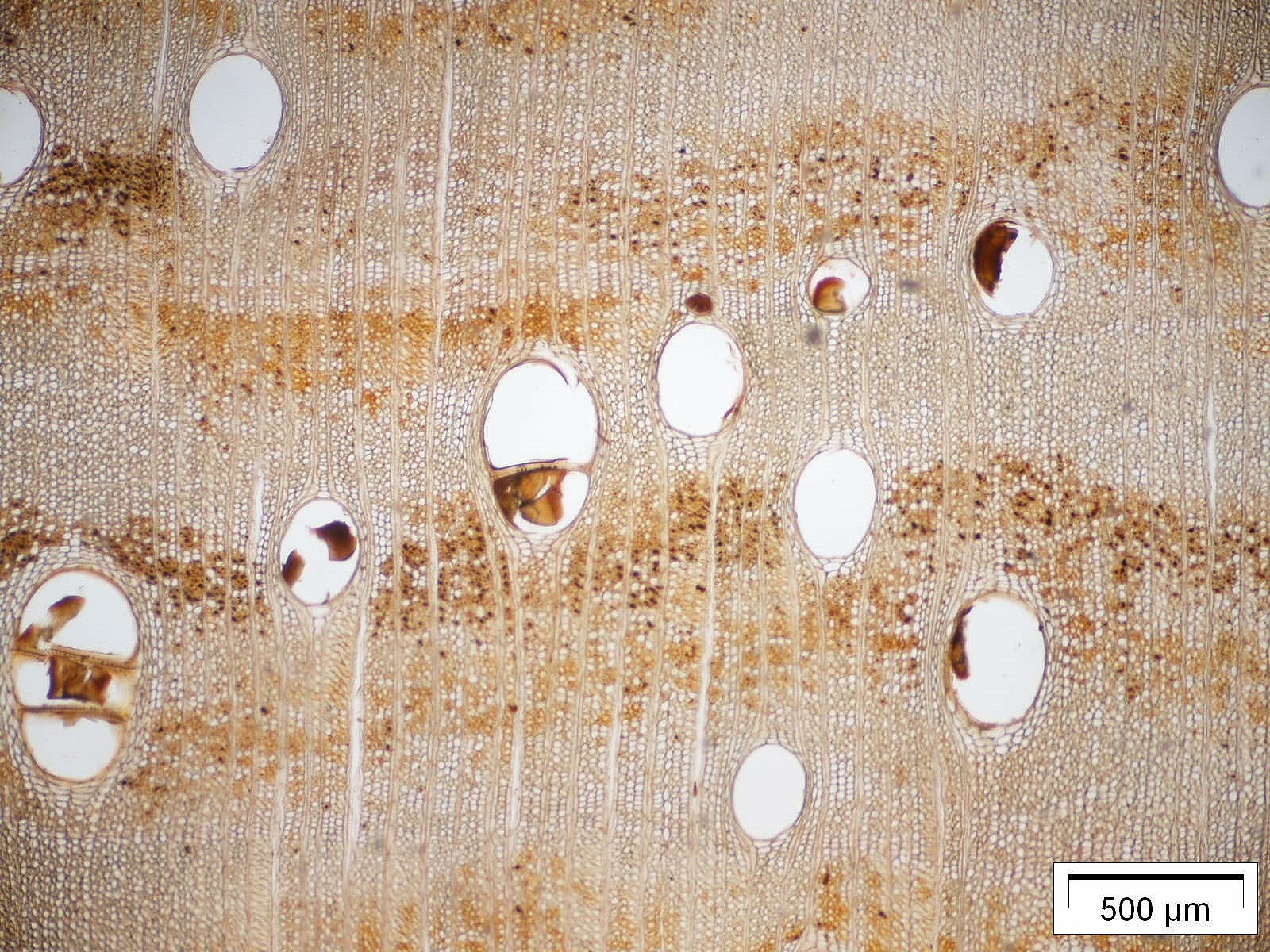
Volker Haag / Thünen Institut für Holzforschung Hamburg, CC BY-SA 3.0, via Wikimedia Commons
Wood Species
Brazilian Rosewood
Dalbergia nigra
- Janka hardness
- 2790 lbf
- Specific gravity
- 0.76
- Workability
- Machines well; oily, gluing needs surface prep
Brazilian Rosewood (Dalbergia nigra) is the wood "rosewood" was named after — a genuinely true rosewood, unlike most of the other trade names claiming the title on this list, which belong to entirely unrelated genera. Its heartwood runs from darker chocolate brown to lighter purplish or reddish brown, with darker contrasting streaks and, in the best pieces, dramatic black veining called spider-webbing.
Legal Status — Why This Isn't a Normal Lumber Purchase
Brazilian Rosewood has sat under CITES Appendix I, the most restrictive classification there is, since 1992. That restriction covers finished products, not just raw lumber, and international trade is now confined almost entirely to antique instruments and furniture made before the restriction took effect. There's no meaningful commercial supply chain for new material anymore — this entry exists for reference and historical context, not as something you can actually go buy. The listed price above is a nominal placeholder for whatever does surface (reclaimed offcuts, antique salvage); sourcing intact new boards through ordinary channels simply isn't possible.
Working Properties
When you can find it, Brazilian Rosewood machines well with both hand and power tools, though its high natural oil content demands surface prep before gluing. It leaves a distinct rose-like scent in the air while you work it — the smell that started the whole naming convention.
Typical Uses
Historically: fine furniture, veneer, and musical instruments (particularly guitar backs, sides, and piano cases) — uses that today almost exclusively mean vintage instruments rather than new construction.
Images
Raw Wood: Querschnitt Dalbergia nigra — Volker Haag / Thünen Institut für Holzforschung Hamburg, CC BY-SA 3.0, via Wikimedia Commons
Images are sourced from Wikimedia Commons under their original open licenses -- see each image's caption for its specific license and attribution.